Featured

Welcome to juliebrown.health

Thanks for stopping by, and being curious about health.

My intention is to create a space of kindness, inclusion and curiosity. Please join me in contributing to this culture consciously.

I have a few questions for you – if you can spare 3-5 minutes, please click on the link below. I am using the data in a wider project to understand the multitude of perspectives on what health is, culminating in a future publication.

We are not the centre.

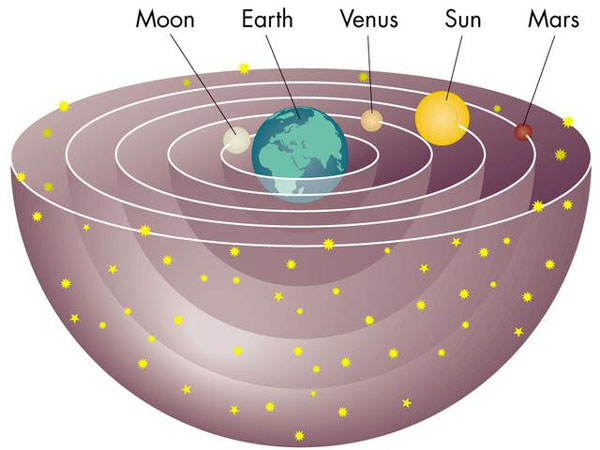
We are in the midst of a paradigm shift in health that is akin to the discovery that the earth was not at the centre of the solar system – we orbit the sun, part of a system much bigger than us.  It was an astronomical shift from being the centre, to being part of.   The discoveries in the world of microbes, the microbiome, the virome and the mycelial networks of soil is demanding a profound paradigm shift in our understanding of what health is, and what causes disease.  We are not the centre of the ecosystem, we are part of a system, much bigger than us. Human health is not centred in the cell, it is in our relationship to the ecosystem through the microbiome (microbes), the virome (viruses) and the mycobiome (fungi).

We are sicker than ever, and many of our modern living practices are to blame.  We have literally been at war with the network of communications and transmissions that nourish our health.    Never before has this been more clear.

As a collective, we are at a crossroads of deciding what health truly is to each of us, and whether or not we believe we can find it in nature and the intrinsic processes of who we are in relationship to the ecosystem, or whether we need to manufacture it.  

The knowledge of the virome (the collective of viruses that live on and in us) have been credited with influencing over 50% of our current DNA.  Yes, that is mind blowing.  We are quite literally influenced by viral messages in the form of nucleic acids, informing our DNA and fueling our evolution.  This is a fundamental shift from a place of war with the biome and the virome, to one of fellowship and relationship.  That is not to say that the biome and the virome do not pose serious challenges to our health and survival.  It is our innate immune system that allows us to come into a balanced relationship with the virome and the biome.  It is our innate immune system that deserves the limelight right now, and all the ways we can protect and support it.  

Lets look more closely at the mucosal membranes that form so much of this innate immune system.  The nose has within it turbinates.  These structures control the air flow as it enters your respiratory system.  The air flow is optimized for temperature and humidity, and filtered by trapping pathogens in the sticky mucous that lines the membranes of the sinus cavities.  Once trapped in the mucous, our mucosal immune system can neutralize the pathogens and eliminate them before they enter the lungs.  You can connect the dots to see one of the many reasons why nose breathing is better for your health than mouth breathing.

Our innate system is about keeping the outside world out, and the inside world in.  While it might seem backwards at first, our gut tube (mouth to anus) is actually part of the outside world – and the decision to bring things into our body is determined at the mucosal membrane of the gut tube, or the lumen.  Glyphosate (the active ingredient in round up) is extensively documented in its harmful relationship to microbes, and ultimately our mucosal membranes – specifically the tight junctions.  The tight junctions hold the cells together, and when injured the membrane becomes permeable to unwanted guests in the inner world. This permeability makes us vulnerable to pathogens, and also contributes to food sensitivities and allergies.  

Why then is glyphosate still endorsed by Health Canada?  Good question.  Many countries have or are in the process of eliminating it, including Austria, France, Russia and Mexico.  Courts have ruled it cancer causing, and the WHO listed it on the possible carcinogens list in 2015.  Several organizations in Canada have lobbied Health Canada to reconsider, unsuccessfully.

Ultimately, regulators have not kept pace with the profound shift in our understanding of what health is, and what causes disease.  The protocols that are used to assess what is safe, and the thresholds that are used are simply not applicable when we consider the intricacies and critical importance of the microbiome and the virome.  This is a major undertaking, and even if there was no resistance to change it will take considerable time and effort.  The intrinsic resistance to change is embedded in the good business practices of capitalism that prioritize profit, inadvertently politicizing health.  

The crux is that we seem to be confusing what is legal, with what is right.

So what do we do in the meantime?  Well, each of us as individuals need to educate ourselves and become conscious of what health is, and where it comes from.  We need to care deeply for our innate immune system and make the radial paradigm shift that the microbiome knowledge warrants.  We need to ask ourselves if we are doing what is legal, or what is right?  We need to incorporate this new knowledge into our health practices, so that our personal and collective outcomes can improve.  We need to be in nature, immerse ourselves in the ecosystem and minimize our toxic exposures to chemicals.  We need to ask questions, and to challenge mindsets that do not operate in a health protective lens.  Health is the currency of our survival.  When we boil it down to that, the future of our species will be determined by the decisions we make about our individual, collective and planetary health.  

We can do better, and with curiosity, inquiry and learning I believe we will.


The Innate Immune System

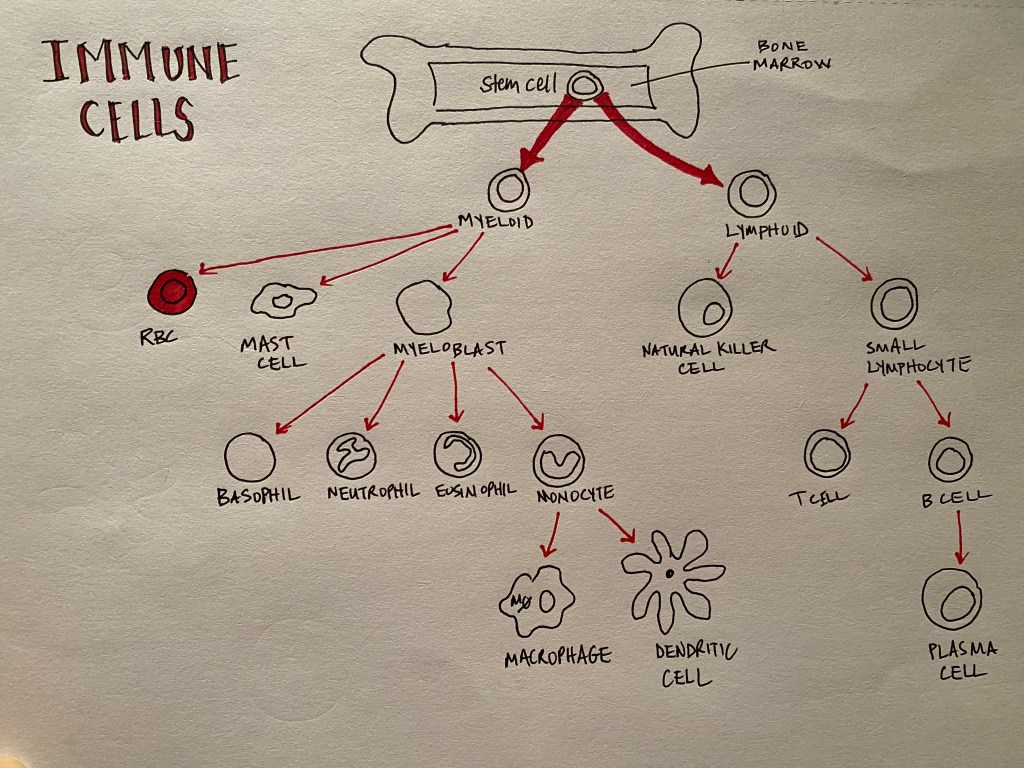
Recall from last week that our immune system has two main divisions – the innate and the adaptive.  The innate immune system is our first line of defence against pathogens.  It includes physical barriers, chemical signals and cellular actions. The skin and mucosal membranes of the respiratory, digestive and urogenital systems form the first line of defense against pathogens (bacteria, viruses and parasites). The integrity of our skin and mucous membranes is very important. If our skin or mucosal membranes are irritated or injured, it is easier for pathogens to breach this physical barrier. When a pathogen breaches this first line of defence, a series of chemical and cellular events unfold immediately to attack and kill the pathogen. The cells that constitute the innate immune system are born from stem cells in the bone marrow, which is part of the lymphatic system. Through a number of steps the pleuripotent stem cells of the bone marrow give rise to white blood cells or leukocytes (neutrophils, eosinophils, basophils, macrophages and lymphocytes), red blood cells (erythrocytes), platelets, mast cells, and dendritic cells. I know that is a mouthful, but leaving any of them out would be like leaving the transmission out of a discussion about vehicles. 

Have a look at the diagram below.  The stem cells in the bone marrow give birth to two lineages.  The left side, or the myeloid lineage, forms the cells of the innate immune system.  The right side, the lymphoid lineage, forms the cells of the adaptive system (next weeks topic).

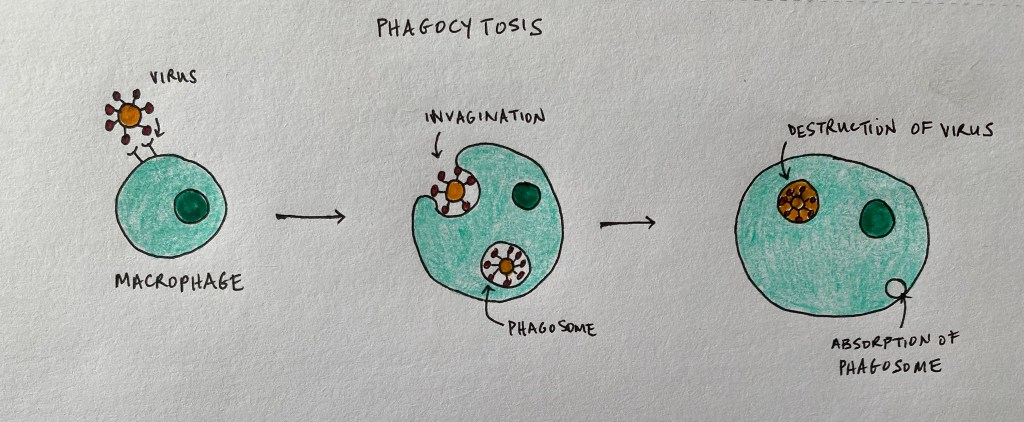
Macrophages and mast cells dwell in the tissue, and are at the ready when a pathogen enters. The presence of a pathogen triggers a cascade of messages and actions that occur in concert, with the aim of destroying and removing the pathogen.  This immediate response spans the first several hours to day after exposure.  Messages relayed by histamine (released by mast cells) encourages dilation of the blood vessels so that cells, proteins and molecules can move more freely through the walls, and into the tissues where needed. Neutrophils (the most abundant white blood cell) circulates in the blood until it is called to a site of infection/injury to engulf and eat the pathogen or infected cell in a process known as phagocytosis. Macrophages also target and kill pathogens/infected cells via phagocytosis.

Complement proteins, secreted by the liver, circulate in the blood until needed in a particular tissue.  They surround the pathogen making it easier for macrophages and neutrophils to attack and destroy, and also enhance inflammation via cytokines.  Cytokines are molecules that mediate and regulate the inflammatory and immune response.  Over the past year, you have likely heard about a ‘cytokine storm’ in relation to Covid.  This is when a healthy and helpful inflammatory process is not appropriately regulated and overwhelms the body causing a severe and potentially deadly situation.  That said, inflammation is a necessary and important process in a healthy response to a pathogen or injury. 

If the infection warrants further support, the dendritic cells are the messenger to alert the adaptive system to bring further reinforcements in the form of a pathogen specific response known as antibodies.  We will dive deeper on the adaptive system next week.

Vitamins & Minerals that Support Immune Health

Vitamin D:  we discussed this last week.   Ensuring you have sufficient vitamin D levels is  an important part of supporting good immune health.  

Vitamin A: an essential vitamin that we must consume in our diet (we cannot make it).  It supports the health of the barrier tissues (skin & mucous membranes).  Too much is toxic, so supplement with care.

Food sources: salmon, shrimp, eggs, sweet potatoes, carrots, spinach, kale, swish chard, winter squash

Zinc: an essential mineral that must be consumed in our diet regularly, as we cannot store it for a rainy day.  Zinc supports brain function, and boosts immune function by supporting the development and action of neutrophils and macrophages.

Food sources: oysters, beef, chicken, pumpkin seeds, cashews, chickpeas

Vitamin C:  it increases antioxidant activity, and supports the absorption of nutrients.  It helps to stimulate the production of leukocytes (wbc’s), supports neutrophils and increases the levels of circulating complement proteins.  The antioxidant function is important as our immune cells release chemical defences to damage and kill targeted cells – vitamin c helps to protect our body’s cells against these actions.

Food sources: citrus, bell peppers, strawberries, cantaloupe, brussel sprouts, broccoli, tomatoes

Disinfectants, Health & Our Schools

While a change to school cleaning practices was warranted in the covid era, what we use to disinfect matters. Not all disinfectants are equal, especially when it comes to health.

Quaternary Ammonium Compounds (quats) are a category of chemicals that have long been ‘generally considered as safe’ (GRAS). Over the past decade, research has emerged that tells us we were wrong. Quats are associated with health risks including asthma, fertility issues and inflammation. California passed legislation in July, 2020 prohibiting the use of disinfectants with quats in their schools, because of the harmful safety profile.

During the important years of growth and development, our children are more vulnerable to toxicity. Cumulative exposure from daily fogging of chemicals with established risk in current science is a burden our children should not bear. Particularly when products with safer risk profiles are readily available.

I approached the my local school district quietly, and with respect. I provided them with a complete review of current scientific literature, input from industry consultants, and a report hi-lighting the issues with quats. I presented a solution that is comparable in cost, used by our local hospital, and has a much safer health profile, when current literature is considered. It is being used by other districts in BC, and in Ontario. Unfortunately after review, they decided not to make a change.

Please write your trustees, your school districts, and our Minister of Education. Express your concerns, and request that they choose products with the least harm, and without quats. These are products with active ingredients of Hydrogen Peroxide and Citric Acid. Please ask them to follow current knowledge, and be open to change when it comes to the health of our children.


Immune Health 101: Context Matters

Let’s begin with a high level overview of our immune system.

Our immune system has two main divisions – the innate system, and the adaptive system. The innate immune system responds immediately to the presence of an antigen (piece of a pathogen) is non-specific and doesn’t require a prior memory. This includes our barriers (skin & mucous membranes) and a number of cells that have specific functions to identify, kill infected cells, and stimulate a more widespread response as needed. The adaptive immune system is slower to respond, is highly specific and holds memories to prior experiences with particular antigens.

Before we get into the nuts and bolts of the cells and and processes that regulate our immune response, we need to appreciate a few basic relationships – to the ecosystem as a whole, the microbiome and the virome.

Historically, language around the immune system has been military like – wars, battles, attacks, and invasions. Louis Pasteur introduced germ theory in 1861, and it has been the prevailing theory of disease for the past 160 years. The basic premise of germ theory is that a pathogen (bacteria, fungi, parasite or virus) causes disease. Pasteurs lesser known contemporary, Bechamps developed the foundations of terrain theory – which many consider to be in conflict with germ theory. In Bechamps terrain theory, the health or state of the person determines a response to a pathogen. If you ask me, they are both right – and it’s all about balance. We have been at war with microbes, when in fact, we are literally covered with them (inside and out).

Over the past few decades, we have come to understand that we are more microbial than we are human cells, numerically speaking. We call this tiny world of microbes our microbiome. It interfaces with our immune system in countless ways and supports our capacity to adapt to the world around us. The virome is the world of viruses that exist in our ecosystem. They are tiny packets of genomic material – they are not living organisms. There are more viruses in the air, the soil and our oceans than there are stars in our universe. We are in constant dialogue with the genomic information of the virome, which has been a hugely important variable in our development as humans. We are not at war with viruses, we are in relationship to them – and have been since the beginning of our species.

This is an important place to start since it literally shifts our paradigm and our perspective of the natural world, and our place in it.

Today we are in an epic dance with SARS-cov-2 that has dramatically changed how we live around the world. Scientists are publishing new information at a record pace, and we are learning more about our relationship with the virome, and the adaptations it demands. We have learned who is vulnerable, how it transmits and the particular receptor through which it enters the cells (ACE-2). Coronaviruses are a family, with many similar properties to one another. Our previous interaction with coronaviruses is remembered by our t-cells, which in dialogue with other immune cells mobilizes our immune system to respond. This is one of the reasons why so many people are asymptomatic or have minimal symptoms. Thankfully, critical care doctors and scientists have collaborated to quickly develop new treatments and establish more effective ways to support those that are severely challenged to adapt.

So, how do you support your immune system to allow a healthy relationship with the virome, and the capacity to adapt.

Back to the basics.

Being hydrated, well rested and well nourished are the foundations of good health. Find ways to connect with people, be active outside in fresh air, cultivate love and joy everyday. These have significant, and well documented impacts on our health and well-being.

Support your microbiome with time in nature, and by avoiding or minimizing your exposure to chemicals – in your food, water, air and environment. Chemicals have a cumulative and significant impact on our microbiome and barrier systems in our body. Our barriers are our first line of support that keep us in balance with microbes and viruses. Our skin and our mucosal membranes – especially in the respiratory and digestive systems are harmed by chemical exposures.

Eating probiotic foods every day increases the diversity and flora of your gut microbiome, naturally. Fermented foods are rich in bacteria (ie. kimchi, sauerkraut, yogurt, miso). A tablespoon per day, of ideally different sources is a great seed for your gut health. There are some people who fall into a category of gut health that cannot tolerate fermented foods, because of a problem with their methylation pathways. Always listen to your body’s response to changes you make, and follow up with your primary care provider if you discover a problem.

Soak up the sun when you can. Vitamin D levels in our blood are one of the most important predictors of our immune response – and the sun is the most natural way to get it. Vitamin D helps to activate a particular group of our immune cells, which clean up and get rid of infected cells and stimulate other important responses. Supplementing with vitamin D can become an important approach, particularly in our climate in the winter. According to recent research, a blood level of more than 30ng/ml (75 nmol/L) is associated with significant reduction in serious or fatal Covid-19 infection. A target level of 40 ng/ml is ideal and achieved through daily or intermittent supplementation. The best approach for you is what matters and should be a discussion you have with your primary care provider as soon as possible – too little is a problem, and so is too much. Dr. David Anderson and Dr. David Grimes have been on a mission throughout this pandemic to bring several decades of research perspectives on vitamin D to the world, in an effort to reduce the negative outcomes of Covid-19. They published a book in July (Vitamin D Deficiency and Covid-19), several articles and have participated in many interviews. A quick google search and you will have more resources than you could ever imagine on vitamin D, from a current expert source.

We will dive deeper into the specifics of vitamins and minerals that support healthy immune function next week, as we take a look at the nuts and bolts of the innate immune system.